
Що робить random Uniform?
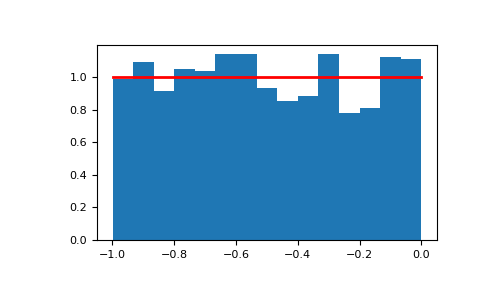
What does random uniform() do?
Python Random uniform() Method The uniform() method returns a random floating number between the two specified numbers (both included).
What does NumPy random uniform do?
The function uniform() in the np. random module generates random numbers on the interval [ low , high ) from a Uniform distribution. The size kwarg is how many random numbers you wish to generate, and is a kwarg in all of Numpy's random number generators. The random numbers are returned as a NumPy array.
What is the difference between random and random uniform?
Difference between the random.random() and random.uniform() The very basic distinction between these functions is that, the random. random() generates random numbers between 0 to 1 (exclusive). And the random. uniform(start, end) generates a random number between the given start and end value (both inclusive).
How to generate uniform random numbers?
The main idea here is we take an integer, square it, and then use the middle part of that integer as our next random integer, repeating the process as many times as we need. To generate the Uniform(0,1) random variable, we would divide each generated integer by the appropriate power of ten.
Draw samples from a uniform distribution. Samples are uniformly distributed over the half-open interval [low, high) (includes low, but excludes high).
Definition and Usage. The uniform() method returns a random floating number between the two specified numbers (both included).
The random.uniform function returns a random number in the range [a, b] drawn from a uniform distribution.